16-Oct-2026 13:13:55
[UTC] 
LNG Bunkering Procedure , Safety and Methods

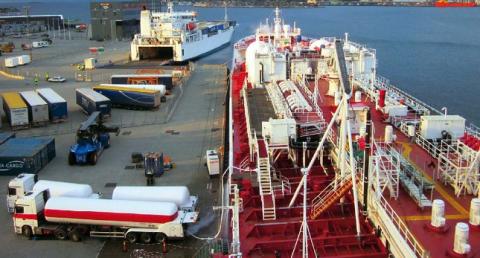
LNG Bunkering may be defined as the process of providing liquified natural gas fuel to the ship for its own power consumption. The main advantage of LNG as a fuel is the vast reduction in pollutant caused by the more traditional method of fuelling ships such as heavy fuel oil, marine diesel fuel (MDO) and marine gas oil (MGO). The safe refuelling of LNG powered ships and even the safe evacuation of LNG fuel from ships in an emergency is of paramount importance for the protection of LNG bunkering as a commercially viable and acceptable sector. Standards and regulations for LNG bunkering exist and are being developed by organisations such as SIGTTO (Society of International Gas Tankers and Terminal Operators), OCIMF (Oil Companies International Marine Forum), IMO (International Maritime Organization), International Organization for Standardisation (ISO), EN (CEN – European Committee for Standardization) and the NFPA (National Fire Protection Association). Loading LNG into fuel tanks is a different process from loading HFO due to some unique differences in the fuel’s characteristics. One difference is that LNG is carried as a boiling liquid, so the temperature and pressure influence the behaviour of the liquid. It is hazardous to personnel and any conventional steel structures or piping with which it comes into the contact.
The third difference is that the vapor from typical petroleum bunkering is not considered to create a hazardous zone due to the flash point and it is simply vented through flame screens to the atmosphere. In contrast to this the, LNG vapor can form explosive clouds in confined spaces and is considered hazardous. Due to this it requires specfic handling of the vapor while bunkering. Several methods of filling LNG storage tanks have been acurately developed in which there is no vapor emitted from the tanks or the vapor is returned back to the bunkering vessel.
The lines used for bunkering must at the completion of bunkering be drained of LNG and the remaining gas vapors are removed by using the nitrogen. Any liquid that is remaining to the pipes that is trapped between the closed valves will boil and expand to fill up the space available. If the space available in this case is smaller in size than the pressure developed by the expanding vapor can increass to dangerous levels and can cause the pipe to burst or values to be damaged.
LNG Bunkering Safety
To address safety during bunkering, potential hazards associated with LNG bunkering, hazard distances, and risks associated with each bunkering concept should be analyzed. In general, development and implementation of a regulatory approval process for LNG bunkering operations and associated facilities is recommended. The process should include a Quantitative Risk Assessment (QRA) that utilizes probabilistic risk acceptance criteria to assess the acceptability of the risk posed. Specific recommendations to promote safe LNG bunkering operations include the following:
- Completion of a port risk assessment at each port where LNG bunkering will likely take place.
- Development of a methodology for and completion of a quantitative port-wide navigational risk
- Assessment that determines how changes in traffic character and frequency/density affect the safety and security of the public, workers, critical infrastructure, and commercial operations.
- Development of effective security and safety zone enforcement procedures to promote a safe environment for the port population.
There are four different LNG bunkering methods that either have been commonly used or have been idealized which are:
1. Truck-to-Ship (TTS): is the most common method used to support the LNG-fueled ship network, to date. It is the transfer of LNG from a truck’s storage tank to a vessel moored to the dock or jetty. Typically, this is undertaken by connecting a flexible hose designed for cryogenic LNG service. A typical LNG tank truck can carry 13,000 gallons of LNG and transfer a complete load in approximately one hour.
2. Shore/Pipeline-to-Ship (PTS): LNG is transferred from a fixed storage tank on land through a cryogenic pipeline with a flexible end piece or hose to a vessel moored to a nearby dock or jetty. These facilities have scalable onsite storage such that designs could be capable of performing bunkering of larger volumes than TTS or with portable tanks.
3. Ship-to-Ship (STS): It is the transfer of LNG from one vessel or barge, with LNG as cargo, to another vessel for use as fuel. STS offers a wide range of flexibility in location bunkering, and flexibility on quantity and transfer rate. There are two types of STS bunkering operations, one is performed at the port, and the other is carried out at sea. This has only been carried out at the Port of Stockholm for the new LNG-fueled ferry, Viking Grace.
4. Portable tanks: They can be used as portable fuel storage. They can be driven or lifted on and off a vessel for refueling. The quantity transferred is flexible and dependent on the number of portable tanks transferred. A 40-foot (ISO-scale) intermodal portable tank can hold approximately 13,000 gallons of LNG.
LNG is bunkered at cryogenic temperatures so special equipment and procedures are required. Any contact of personnel with the fuel will cause severe frostbite. Spillage of even small amounts of LNG can cause structural problems as unprotected normal structural steel can become embrittled by the cold liquid, leading to fracture. Stainless steel drip trays, break-away couplings, and special hose connections that seal before uncoupling are often used to protect from spillage. Communication between the receiving ship and the bunkering facility is always important, but it is even more critical when handling LNG. Because of the greater potential for hazardous situations with LNG bunkering, proper procedures should be followed and understood between the personin-charge on the bunkering facility and receiving ship. Security and safety zones around the bunkering operation need to be set up to reduce the risk of damage to property and personnel from the LNG hazards, reduce the risk of outside interference with the LNG bunkering operation, and to limit the potential for expansion of a hazard situation should LNG or natural gas release take place.
Factors Affecting Tank Capacity for Bunkering LNG
Typical LNG characteristics, including chemical components and composition, heating value, methane number, liquid density, and methane vapor pressure (boiling pressure) are provided in the Appendix. The following characteristics represent key considerations for handling LNG and highlight its important differences from typical liquid fuel storage and bunkering. Bunkering (Loading) Temperature: At atmospheric pressure, natural gas will liquefy at a temperature of about -162°C (-260°F). As LNG increases in temperature, its vapor pressure increases and its liquid density, decreases. These physical changes need to be considered because they may increase the required storage tank volume and pressure rating.
Filling Limit: The filling limit of an LNG tank is the maximum allowable liquid volume in the tank, expressed as a percentage of the total tank volume. The filling limit is not the same as the loading limit. The maximum filling limit for LNG cargo tanks is 98 percent at the reference temperature. This same limit is expected to apply to LNG fuel tanks. A higher filling limit may be allowed on a case-by-case basis based on requirements from classification societies and regulatory bodies.
Reference Temperature: The reference temperature is the temperature corresponding to the saturated vapor pressure of the LNG at the set pressure of the pressure relief valves. For example, if the LNG tank has a pressure relief valve set pressure of 0.7 barg (10.15 psig), then the reference temperature is -154.7°C (-246.4°F), which is the temperature that natural gas will remain a liquid at 0.7 barg (10.15 psig).
Loading Limit: The loading limit is the maximum allowable liquid volume to which the tank may be loaded, expressed as a percentage of the total tank volume. This limit depends on the LNG densities at the loading temperature and reference temperature
Effect of Temperature and Pressure on Loading Limit: To understand the effect of temperature and pressure on the loading limit, it is helpful to consider an example where LNG and vapor are not being consumed from the tank. In this case, the LNG tank is a closed system and remains at a saturated condition, meaning the liquid and vapor are in equilibrium. Even though the tank is insulated, some heat will leak into the tank and cause an increase in the liquid and vapor temperatures while they remain in a saturated condition. Liquid density decreases as temperature increases. If the tank is nearly full, the space available for vapor is relatively small, so the increase in liquid volume due to a lower density can significantly reduce the available vapor space volume. This decrease in available vapor volume as a result of the temperature changes will result in higher vapor pressure. If the tank temperature is allowed to increase unchecked, the pressure in the tank will increase to the point where the pressure relief valves open. The temperature of the LNG at this point is the reference temperature. Because the density of the LNG at the reference temperature is lower than the density at the loading temperature, and given the formula for the loading limit, it is clear that the loading limit will always be lower than the filling limit. As the pressure relief valve setting is increased, the reference temperature of the LNG also increases, which has the advantage of increasing the amount of time it takes for the tank to reach the pressure relief opening pressure. However, because the reference temperature is higher, the LNG density at the reference temperature will be lower, resulting in a greater difference between the LNG density at the loading and reference temperatures than in tanks with a low relief valve setting. This presents a tradeoff between initial loading capacity and the time it takes to reach the set pressure of the relief valve.
Heel: The volume of LNG that is normally left in the tank before bunkering is called the tank heel. This small volume of LNG keeps the LNG tank cold before it is refilled during bunkering. The required tank heel should be calculated with the assistance of the tank designer and fuel gas designer based on several variables such as tank size and shape, ship motions, heat inflow from external sources, gas consumption of the engines, and bunkering and voyage schedule. As a general rule of thumb, for initial design considerations a tank heel of 5 percent can be assumed.
Usable Capacity: In general, the usable capacity of the LNG tank is equal to the loading limit minus the heel, expressed as a percentage of the total tank volume. The usable capacity is the consumable volume of bunkered LNG in the tank
Safety and Risk Assessments
LNG presents hazards that are different than conventional marine fuels, like heavy fuel oil (HFO) and marine gas oil (MGO). If released at normal ambient temperatures and pressures it will form a flammable vapor, so the release of LNG or natural gas should be prevented at all stages of the bunkering process. Furthermore, in its liquid phase, LNG is cold enough that it can cause ordinary steel to become brittle and crack, so any contact with steel structures and decks should be avoided. Because of these hazards and others that can occur, safety and the prevention of leakage need to be among the primary objectives in the development of LNG bunkering system designs and procedures.
The three primary safety objectives for LNG bunkering operations are as follows:
Prevent the occurrence of any hazardous release of gas or liquid.
In the event of a release, prevent or contain any hazardous situations.
If a hazardous incident does occur, limit the consequences and harmful effects.
Major Hazards
The primary hazards of LNG are:
- Serious injuries to personnel in the immediate area if they come in contact with cryogenic liquids. Skin contact with LNG results in effects similar to thermal burns and with exposure to sensitive areas, including eyes, tissue can be damaged on contact. Prolonged contact with skin can result in frostbite and prolonged breathing of very cold air can damage lung tissue.
- Brittle fracture damage to steel structures exposed to cryogenic temperatures. If LNG comes into contact with normal shipbuilding steels, the extremely cold temperature makes the steel brittle, potentially resulting in the cracking of deck surfaces or affecting other metal equipment.
- Formation of a flammable vapor cloud. As a liquid, LNG will neither burn nor explode; however, if released from bunkering equipment, it will form a vapor cloud as the LNG boils at ambient temperatures. To result in a fire or explosion, the vapor cloud must be in the flammable range, which for methane is between 5 and 15 percent by volume in air, and there must be an ignition source present.
- Asphyxiation. If the concentration of methane is high enough in the air, there is a potential for asphyxiation hazard for personnel in the immediate area, particularly if the release occurs in confined spaces.
Safety and Security Zones - LNG Bunkering.
The use of safety and security zones around the LNG bunkering operation are necessary to prevent the creation and spread of hazardous situations that may result from the LNG bunkering. The intent is to prevent accidental gas release as a result of damage to the LNG bunkering system and to prevent ignition of any released gas.
The two types of zones have different purposes and definitions.
Safety Zone
The purpose of a safety zone is to designate an area where only essential personnel with proper training are allowed to enter and where no sources of ignition are allowed. The extent of the zone is determined by various criteria depending on the regulation or reviewing authority. The safety zone extent should include all surrounding areas where the likelihood or probability of flammable mixtures occurring due to accidental release of LNG or natural gas are considered high enough to be a risk to the vessel and personnel. The flammable mixture risk probability can be determined during a risk assessment process.
Security Zone
The purpose of the security zone is to create an area of sufficient size that keeps other vessels, vehicles, equipment, and cargo operations far enough away so that they pose little risk of damaging or interfering with the LNG bunkering system and equipment. This zone is intended to keep nonessential personnel far enough away so that injury by any hazardous incident during the bunkering operation is unlikely, and to make it difficult for a person to intentionally damage or interfere with the bunkering system and equipment.
The requirements regarding how to mark off the zones, what signs are needed, how to enforce the zones, which personnel can enter the zones, and what safety equipment and PPE are needed are to be specified in the operating manuals prepared for the bunkering operation.
Share it now!